


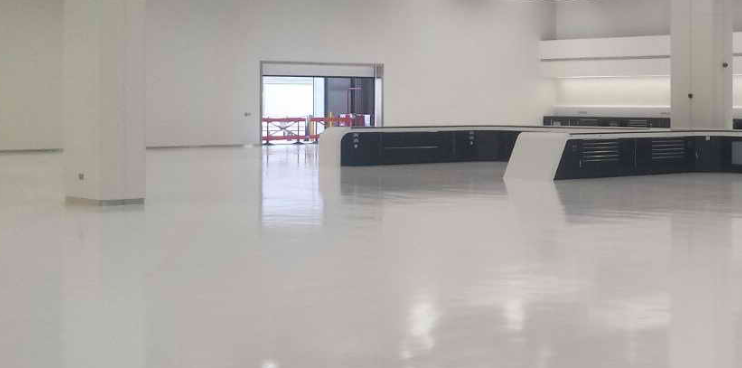

Thickness changes how an epoxy floor responds to traffic, impact, chemicals, and daily cleaning. Proper build gives each layer enough material to protect the concrete without creating curing or adhesion problems. Understanding that balance helps property owners compare flooring systems based on performance instead of appearance alone.
How Does Thickness Affect Everyday Wear?
Vehicle tires, rolling carts, foot traffic, and tracked-in grit slowly wear down any floor coating. Adequate epoxy flooring thickness creates more material between that abrasion and the concrete below, which can extend the useful life of the system.
Thin coatings may look finished at installation yet wear through faster in busy areas. Garages often develop stress along tire paths, entrances, and workbenches, while commercial spaces see concentrated wear near doors, aisles, and equipment. Homeowners searching for an epoxy garage floor near me should ask about total system thickness rather than assuming all epoxy applications use the same amount of material.
Thicker Systems Handle Impact More Effectively
Dropped tools and heavy equipment create concentrated force in a small area. Greater coating build can help distribute that force, especially when the system includes a strong base coat, aggregate, decorative flakes, or a durable top layer.
Warehouses and workshops place heavier demands on flooring than a lightly used residential room. Commercial epoxy flooring may need additional build where pallet jacks, carts, machinery, or repeated impacts are part of daily operations. Contractors should match the coating depth to those loads instead of simply applying an extra coat without considering the full system.
Why More Epoxy Is Not Always Better
Excess material can create its own problems. Epoxy applied beyond the manufacturer’s recommended thickness may trap air, generate too much heat while curing, or leave softer material underneath a hardened surface.
Heavy application can also lead to uneven texture, longer cure times, roller marks, or sections that do not harden consistently. Experienced epoxy floor companies control coverage with measured application rates and suitable tools. Precision matters more than pouring additional resin onto the floor.
Different Layers Have Different Thickness Jobs
Professional systems usually contain several layers rather than one thick pour. Each coat serves a specific purpose, so the final thickness comes from the combined build.
Primer penetrates the prepared concrete and supports adhesion. Base coats provide color and body, while flakes or quartz can add texture and depth. Clear topcoats protect the decorative layer from abrasion, chemicals, and routine cleaning.
Together, these layers may include:
- A penetrating primer suited to the slab
- One or more pigmented body coats
- Decorative flake or quartz broadcast material
- A clear protective topcoat
- Added traction media where needed
Property owners comparing epoxy floors near me should request details for the complete system. A contractor who only states the thickness of one layer may leave out important information about how the finished floor is built.
Surface Condition Can Change the Required Build
Damaged concrete cannot be corrected simply by applying thicker epoxy flooring. Pits, cracks, low areas, and worn sections often need separate repair materials before the coating system begins.
Uneven slabs may also require patching or resurfacing so the finish maintains a consistent depth. Grinding helps expose solid concrete and creates the surface profile needed for adhesion, but it can reveal defects that were hidden beforehand. Searches for epoxy flooring near me should lead to contractors who inspect the slab before deciding how much material the floor needs.
Does a Garage Need the Same Thickness as a Warehouse?
Residential garages and industrial spaces face very different conditions. Cars, bicycles, rolling storage, lawn equipment, and household projects create moderate wear, while warehouses may deal with forklifts, steel wheels, heavy loads, chemicals, and constant movement.
A properly designed garage system still needs enough build to handle hot tires, road salt, grit, oil, and changing temperatures. Industrial floors may require thicker resin layers, aggregate reinforcement, or specialized topcoats in areas exposed to heavier abuse. Matching thickness to real use prevents both underbuilding and unnecessary material cost.
Topcoat Thickness Protects the Layers Underneath
Clear topcoats form the first line of contact with shoes, tires, spills, and cleaning tools. Sufficient thickness helps protect the color coat or decorative flakes below while also influencing gloss, texture, and resistance to scratches.
Polyaspartic or polyurethane finishes may be selected where greater abrasion, chemical, or UV resistance is needed. Applying the top layer too thin can shorten its service life, while spreading it too heavily may reduce traction or create curing issues. People reviewing epoxy floors near me options should ask how the topcoat is specified for the room’s actual conditions.
Elite Coastal Epoxy works with residential and commercial concrete surfaces that require more than a one-size-fits-all coating. Its team can evaluate traffic, slab condition, moisture, repairs, and expected wear before recommending an epoxy flooring system with the appropriate build for dependable long-term performance.